BEFORE THE DETAILS
- Choose a documented sublimation blank, not a lookalike.
- The base colour and composition contribute to the finished design.
- Approve a sample for each product type before applying the identity across the range.
1. Read the surface specification before choosing the image
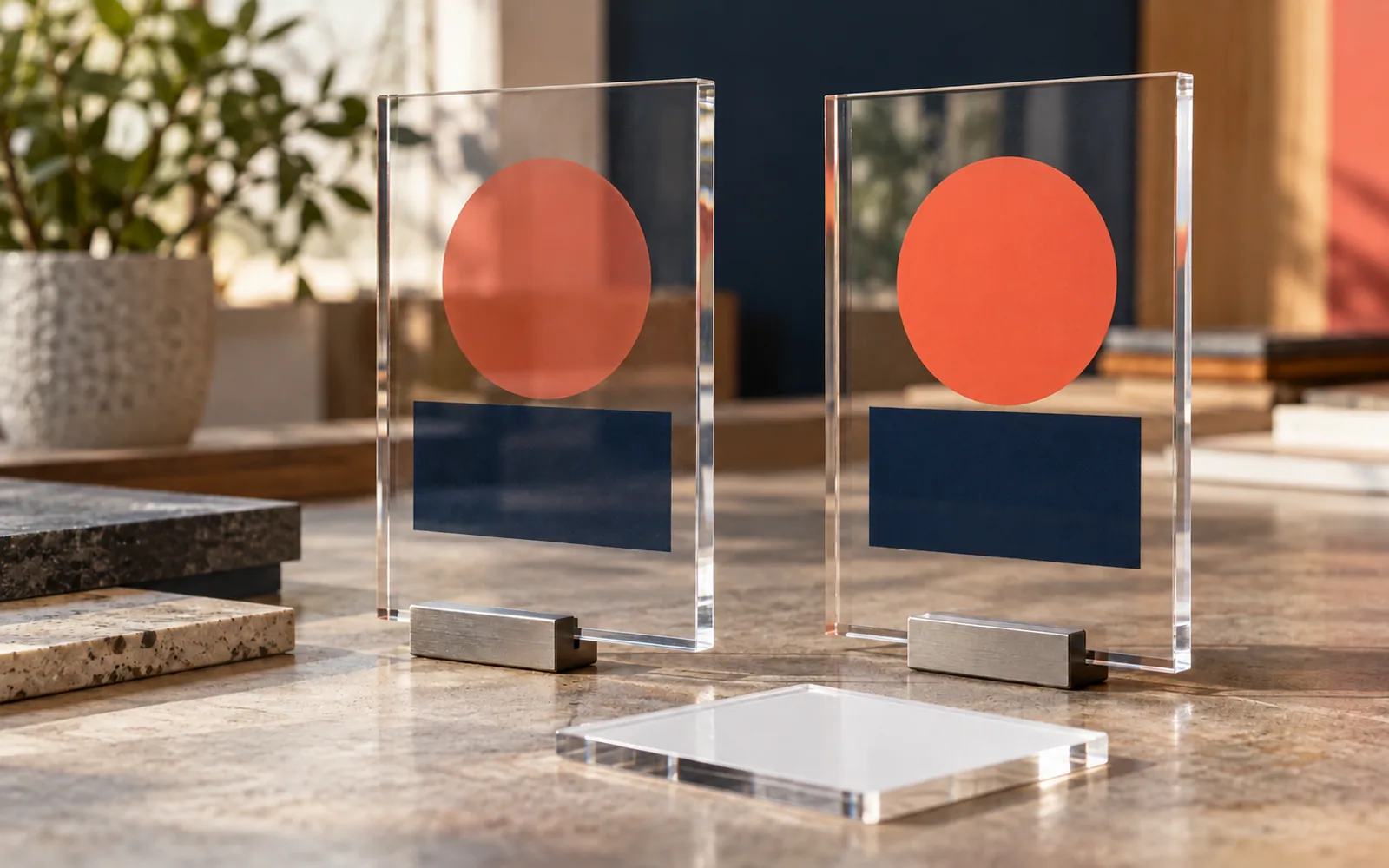
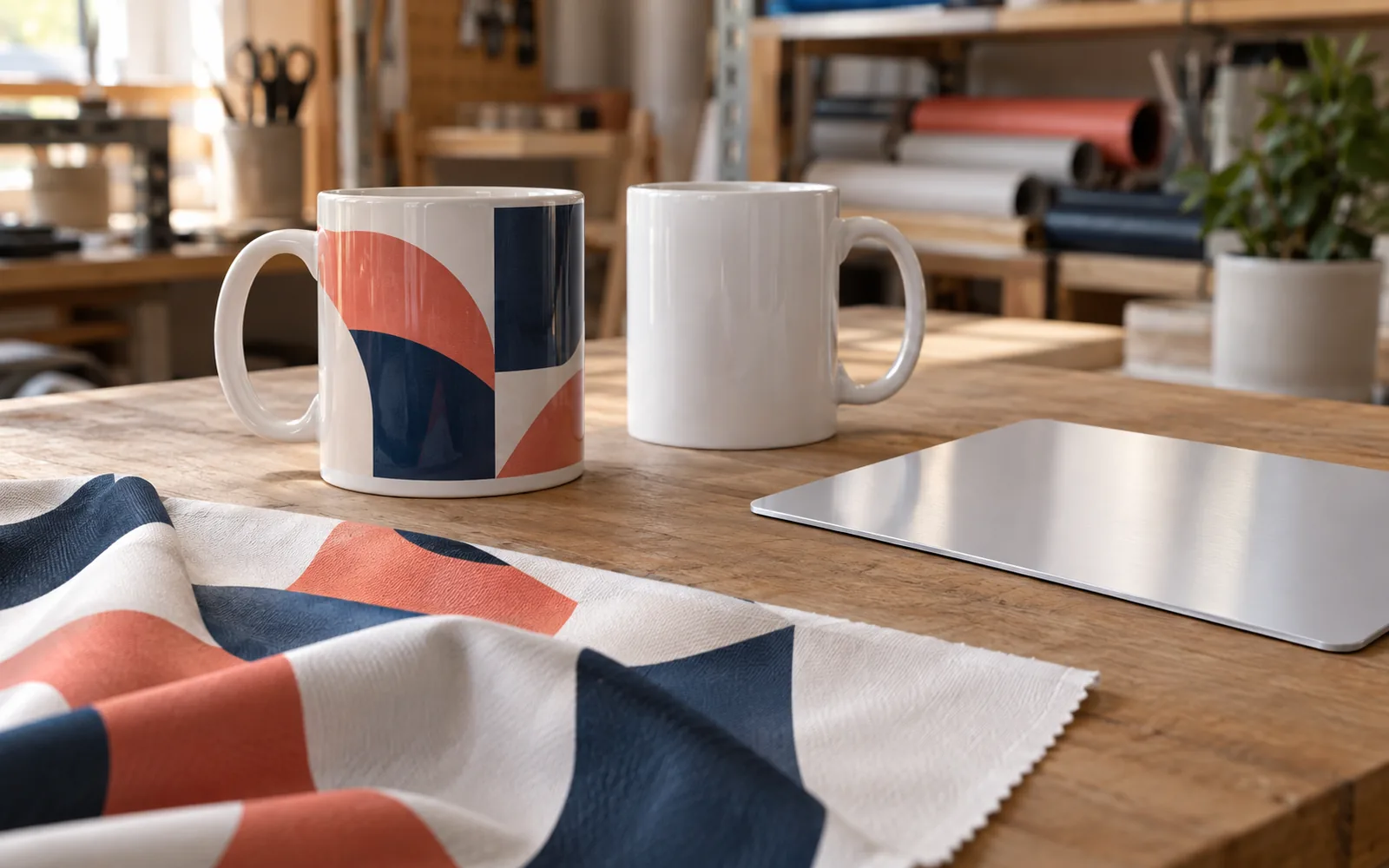
Epson explains that sublimation uses polyester fabrics or hard goods with a suitable dye-receiving coating. A white mug or smooth metal surface alone is not enough: look for an explicit sublimation specification. Record the supplier, product code and coating description, and seek clarification when the information is incomplete.
For textiles, keep the composition label and the supplier-stated polyester percentage rather than judging by touch. For hard goods, verify that the intended artwork lies within the prepared surface and that the shape suits the available production system. Check these points before buying quantity or locking in artwork that would be difficult to change later.
Also ask about the product’s intended use and care instructions. A printing specification does not automatically establish suitability for food use, dishwashers or microwaves. For a mug or vessel, use requirements, cleaning and decoration boundaries remain tied to supplier documentation and the actual application; exclude a product when these details cannot be established.
2. Treat the product colour as part of the design
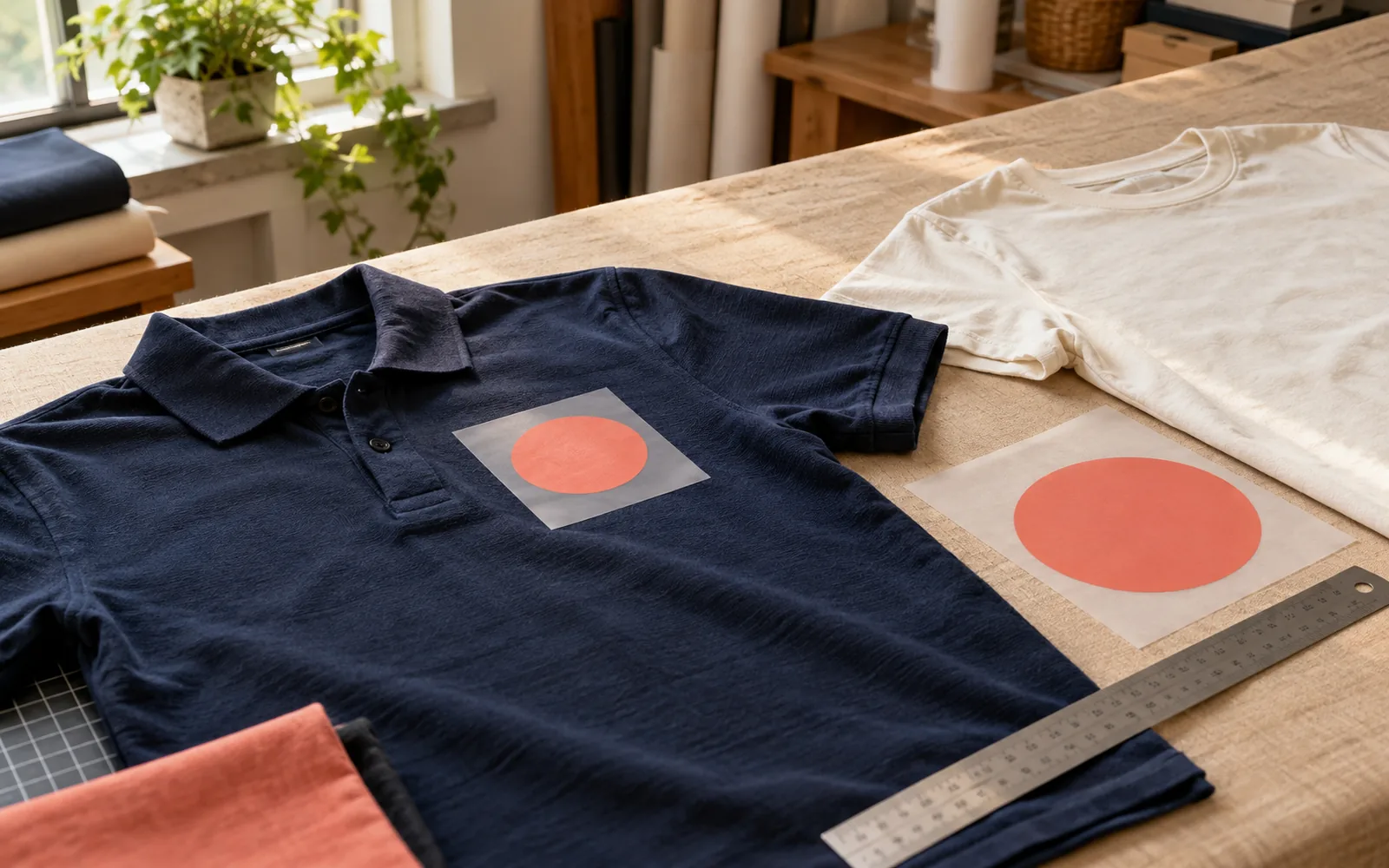
Conventional sublimation does not add white ink. Epson identifies white or pale blanks as the usual choice and notes that higher polyester content supports more vibrant textile colour. A white area in the artwork therefore depends on the underlying product rather than a printed white layer covering a dark surface.
Place the logo over a mock-up using the actual product colour, then review contrast and negative space. If the identity relies on bright white, ask how it will look on an ivory-toned surface. The mock-up explains the decision but does not approve colour: a printed sample on the actual product is the reference the customer can inspect and compare.
Review product geometry too. A long word on a curved mug may not be visible from one viewpoint, and key artwork close to the handle may disappear during use. Define the principal viewing side and the shop’s product-photography view, then request the producer’s printable-area template instead of estimating it from packaging dimensions.
3. Distinguish sublimation from DTF when specifying a product
Sawgrass describes sublimation as heat-transferring dye into polyester or a purpose-coated surface. Garment DTF instead transfers artwork from film through an adhesive system and can include a white layer. Having a heat stage in common does not make these the same process, or make one set of instructions valid for the other or for a similar-looking product.
Start by asking whether the priority is a particular customer-owned item or a printed appearance for which a suitable blank can be chosen. If the product is fixed, assess its compatibility first. If the concept is flexible, compare samples of documented options and choose acceptable texture, colour and appearance rather than selecting a process by its name alone.
| Situation | What to verify | What not to assume |
|---|---|---|
| Pale sublimation textile | Fibre composition and colour sample | That every white fabric is suitable |
| Coated hard gift | Specified coating and printable area | That an ordinary item has the same coating |
| Dark garments with DTF | Transfer system, sample and care | That sublimation settings apply |
| A new supplier’s product | Product code, documentation and trial | That visual similarity is enough |
4. Design a sample test around what matters
Include the main brand colour, small text and a portion of the image you will actually use. Do not rely only on a stock sample with unrelated colours. Record the product, artwork and approver, then compare samples under the same light so photographic differences are not mistaken for printing differences.
Sawgrass notes that the substrate affects colour and that transfer conditions matter when diagnosing results. It also describes its settings chart as a starting point requiring testing and manufacturer guidance. The specialist should retain the sample’s operating record, while the customer approves a comparable result without generalising time or temperature between products.
Inspect the sample from practical viewing positions: around the handle, near edges and where artwork crosses a curve. Decide whether any variation is acceptable or requires changing the design area. If the product, supplier or template changes, review the affected elements again instead of relying on approval for a different combination.
5. A planning example for business gifts in Oman
Suppose a company in Sohar wants a welcome set containing a white mug and a lightweight bag carrying the same name. Specify each item independently: do not buy the mug merely because it is white or choose the bag because it resembles a reference photograph. Review both products’ documentation and define suitable space for the Arabic and English logo on each.
The mug may need a horizontal arrangement read from the use side, while the bag needs a shorter central composition. Review both samples together for a consistent impression without demanding impossible visual identity between different surfaces. After approval, retain both product specifications and artwork revisions, and prepare separate suitable care guidance rather than one vague generic card.
Before confirming quantity, gather item counts, language variants, packaging needs and the reviewer for any names. State whether the customer supplies the products or the producer is being asked to suggest options. These details make the discussion concrete; product availability and print feasibility remain order-specific checks, not promises inferred from this guide’s examples.
Common questions
Can any white mug be sublimated?
A hard blank needs a process-compatible coating and a reliable supplier specification. White colour alone does not establish the coating or suitability for the intended production system and use.
Why does white artwork take on the product colour?
Conventional sublimation does not print white ink, so those areas show the base colour. Review the light-coloured blank and a sample before approving artwork that relies on white details.
Does approving a mug sample approve the other gifts?
No. Each product has its own surface, shape and printable area. Review the group together visually, but record product, sample and care approval for each item.
Sources and further reading
YOUR NEXT STEP
Turn the details into a clear brief.
Send the gift idea, product image or specification, quantity and logo so we can review suitable blanks, the sample plan and supply and production feasibility.