BEFORE THE DETAILS
- Choose the film for the print and its use, then review the application process.
- Some cold-lamination systems can use approved heat assistance.
- Lamination does not make every print waterproof or suitable for floors.
1. What does lamination add?
A compatible film can change gloss and texture and add specified protection to the printed surface, according to its properties. The goal might be everyday handling, a particular appearance or a surface cleanable with approved products. State that need first: general protection does not define the required resistance to scratching, cleaning or sunlight.
Laminating the printed face differs from encapsulating both sides with sealed edges, and from adhesive mounting to a backing board. A single item may combine some of these operations. For a menu or display panel, explain how it will be handled, hung and cleaned, and whether it needs later trimming or holes, so the complete construction can be reviewed.
2. The practical difference between cold and thermal
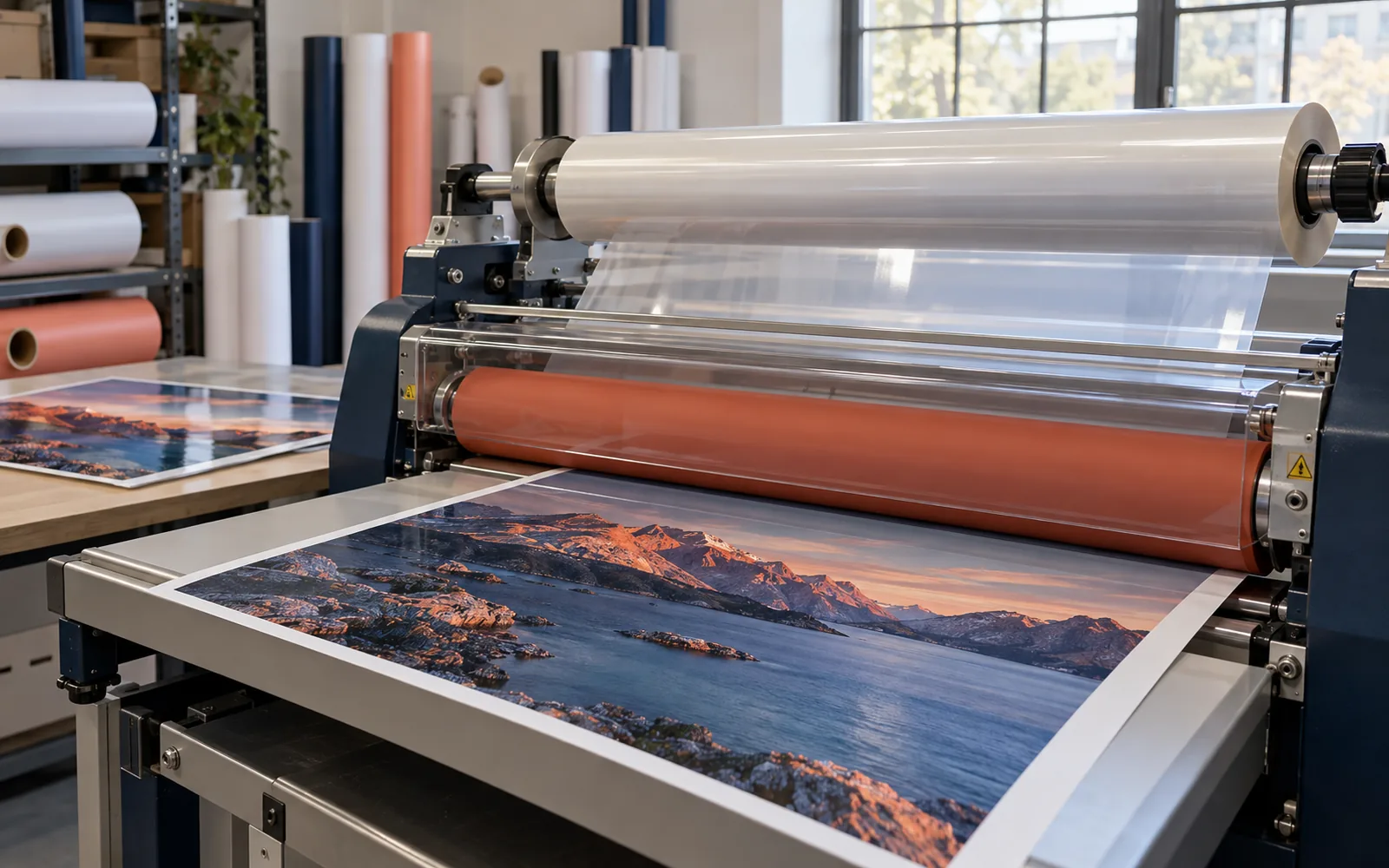
Pressure-sensitive film carries an adhesive that the rollers bond to the print after its release liner is removed. This is commonly called cold lamination, although some machines use approved heat assistance to improve adhesive behaviour. Cold therefore does not always mean that no heat is used, and it does not permit arbitrary temperatures for any film.
Thermal lamination uses heat to activate the adhesive on a suitable film, together with pressure and the required workflow. The film, print, substrate and machine must be compatible. One laminator may support more than one process, but differences in heat, thickness and adhesive make the material specifications and machine manual essential. The combination matters more than the machine name.
| Process | Key check |
|---|---|
| Pressure-sensitive | Adhesive compatibility with ink and substrate surface |
| Cold with heat assistance | Approved heat conditions for the substrate, film and system |
| Thermal | Suitable film and a print that tolerates the application process |
3. Gloss and matte are part of a wider choice
Gloss can change the impression of colour, while matte changes how light is reflected. Compare finishes on the same artwork under the intended lighting, especially for small text, menus and phone-scanned codes. Some films have special textures or functions, such as dry-erase use or a specified resistance. Verify the product specification rather than inferring performance from its appearance.
A laminate on a curved-surface graphic must be compatible with the flexibility of the print media. A floor graphic needs verification of the system’s suitability for that use and the relevant slip-resistance requirements. A thick or matte film is not sufficient evidence. For outdoor use, assess substrate, ink, adhesive, protection and exposure together, and avoid assuming a fixed life in every condition.
4. When is the print ready, and how is the result checked?
A print is not ready simply because the image looks dry. Readiness follows the ink and media instructions: some eco-solvent combinations need a defined solvent-release period, while other systems allow finishing once curing is complete. Resolve this in the schedule before committing delivery, because trapping an unready print beneath a film can compromise the result.
Inspect a sample from different angles for wrinkles, bubbles, dust or poorly bonded edges. Fine trapped air at the adhesive interface can create a silvery appearance known as silvering. Neschen guidance notes that appropriate heat assistance can reduce it in certain combinations. Diagnosis and adjustment still depend on the materials and system instructions, rather than on a universal recipe.
5. Roller care and preparing the brief
A trained operator cleans and maintains rollers using the machine manual and approved materials, following safety procedures for heat and pinch points. Recurring defects or abnormal behaviour call for stopping the process and seeking appropriate support. For the customer, approve a completed sample including any trimming and holes, since the edges are part of product performance.
- Print type, substrate, dimensions and quantity.
- Required texture and gloss, use and cleaning method.
- One or two sides, and whether sealed edges or board mounting are needed.
- Any later cutting, bending or installation, and the final required date.
Common questions
Does laminated paper become completely waterproof?
Protection depends on the construction, edges, holes and use. Adding film does not establish complete waterproofing; evaluate the finished product and material instructions.
Can any film laminate any material?
No. Adhesive, film, ink, substrate and application process must be compatible. A small sample helps check appearance and bonding before the production run.
Sources and further reading
YOUR NEXT STEP
Turn the details into a clear brief.
Send a photograph and the print material, and describe where it will be used, how it will be cleaned and whether you prefer gloss or matte.